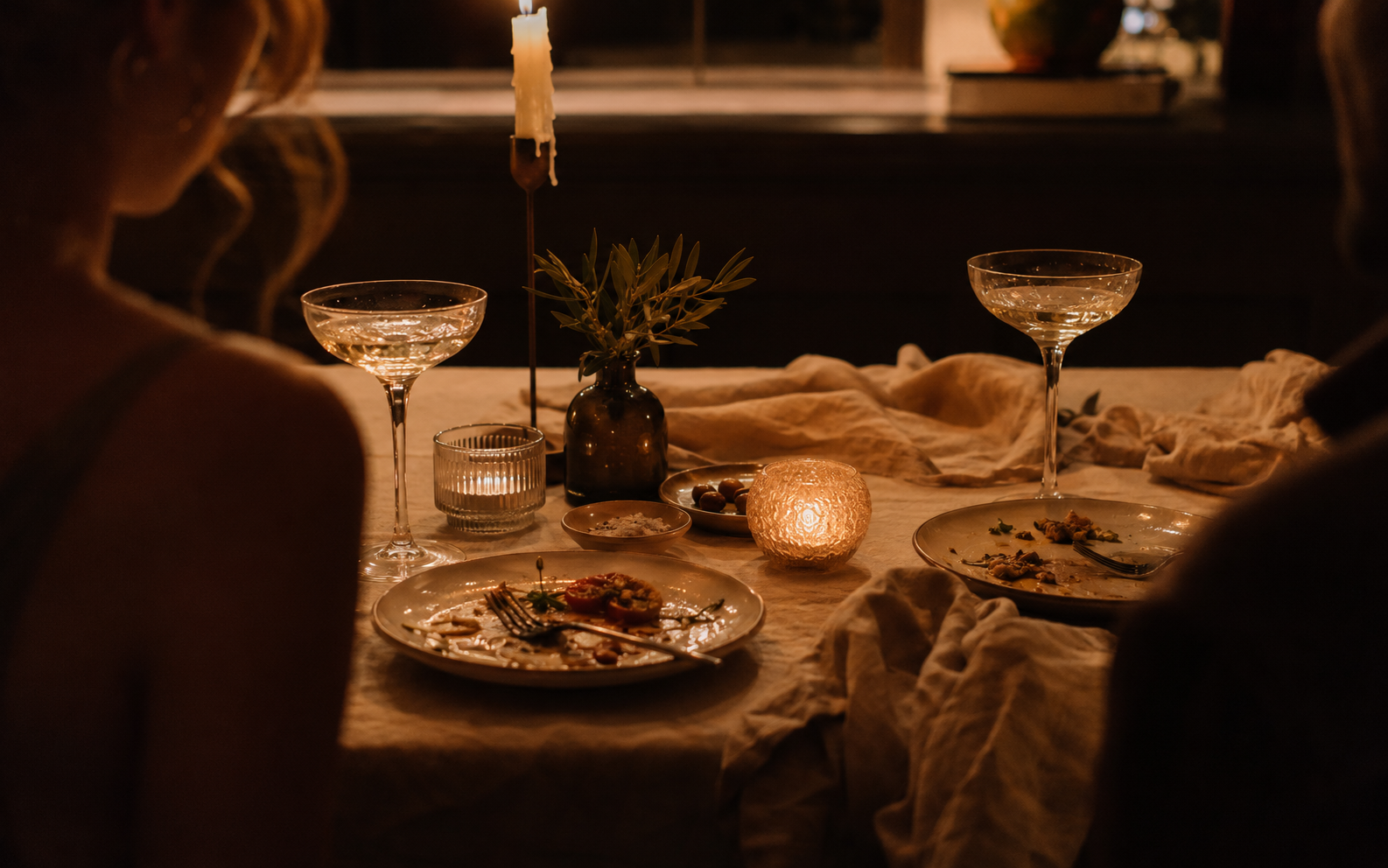
A table can be furniture, or it can be a message: you are expected, there is enough, and you do not have to perform your arrival.
Set the welcome before the door opens
A low light, a glass already waiting, bread within reach—small signals tell people they can settle. The table does not need to match. It needs to feel considered.
Leave one imperfect thing visible. Hospitality is more persuasive when it feels lived in rather than staged for evidence.
“The feeling is the luxury: someone thought about your arrival before you made it.”
Make room for the people you have
The most useful objects are the ones that help a meal keep moving: a bowl that can be passed, a chair that does not punish a long conversation, a serving spoon that invites another portion.
Set the table for the evening you hope to have, then let the evening become itself. Generosity is not a tablescape; it is attention that survives the first spill.
- Set the first drink and the first bite before guests arrive.
- Use one beautiful object and keep the rest easy.
- Do not apologize for the room you live in.
The FSA Verdict